J.R.R. Tolkien
Introduction
John Ronald Reuel Tolkien, known as J.R.R. Tolkien, was born on January 3, 1892, in Bloemfontein, South Africa, and is widely regarded as one of the most influential authors of the 20th century. He is best known for his epic fantasy works, The Hobbit (1937) and The Lord of the Rings trilogy (1954–1955), which have shaped the fantasy genre and become some of the most beloved works in literature.
Early Life and Education
Tolkien was born in South Africa, where his father, Arthur Reuel Tolkien, worked as a bank manager. The family returned to England when Tolkien was just three years old after his father’s death. Raised in a poor but intellectually stimulating environment, Tolkien developed a love for languages and literature early on.
He attended King Edward’s School in Birmingham, where he excelled in languages. Tolkien then went on to study at Exeter College, Oxford, where he earned a degree in English Language and Literature. His academic interests focused on philology (the study of languages), which would greatly influence his later works, particularly in the creation of the languages of Middle-earth.
World War I and Academic Career
Tolkien’s academic career began in earnest after he graduated from Oxford. He worked as a professor of Anglo-Saxon at the University of Leeds before moving on to a similar position at Oxford University. His research and scholarly work, particularly in Old English texts, helped to shape the literary world of his imagination.
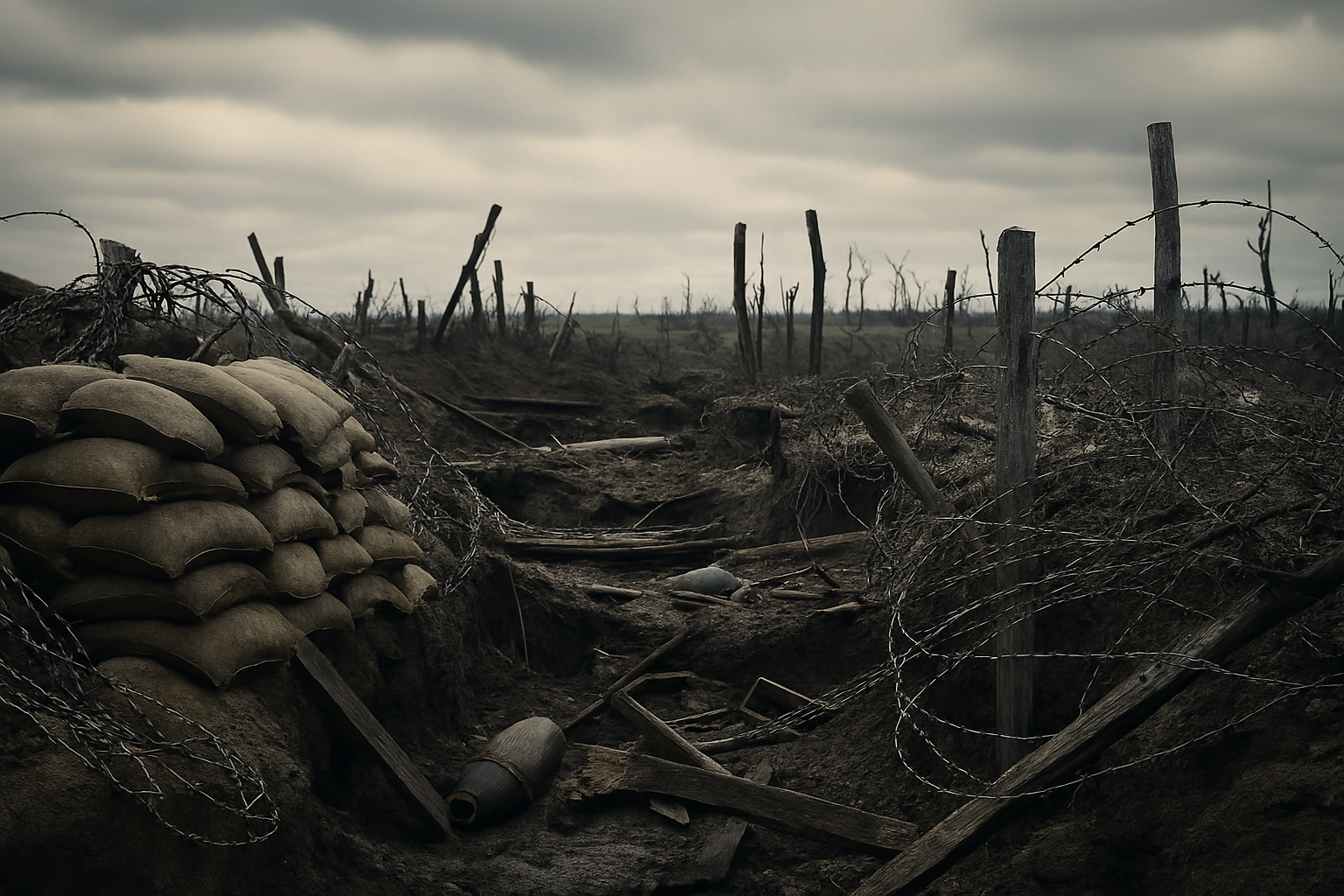
However, before embarking on his academic career, Tolkien served in World War I. He was a second lieutenant in the Lancashire Fusiliers and fought in the Battle of the Somme, one of the bloodiest battles of the war. The traumatic experiences of war left a profound impact on Tolkien, and many of the themes of loss, destruction, and heroism in The Lord of the Rings reflect his experiences.
Generated by AI
The Hobbit and The Lord of the Rings
Tolkien’s career as a writer began in earnest with The Hobbit, which was published in 1937. Initially written for his children, the book told the story of Bilbo Baggins, a reluctant hobbit hero, who embarks on an unexpected journey with a group of dwarves to reclaim treasure from the dragon Smaug. The success of The Hobbit set the stage for Tolkien’s most ambitious work, The Lord of the Rings.
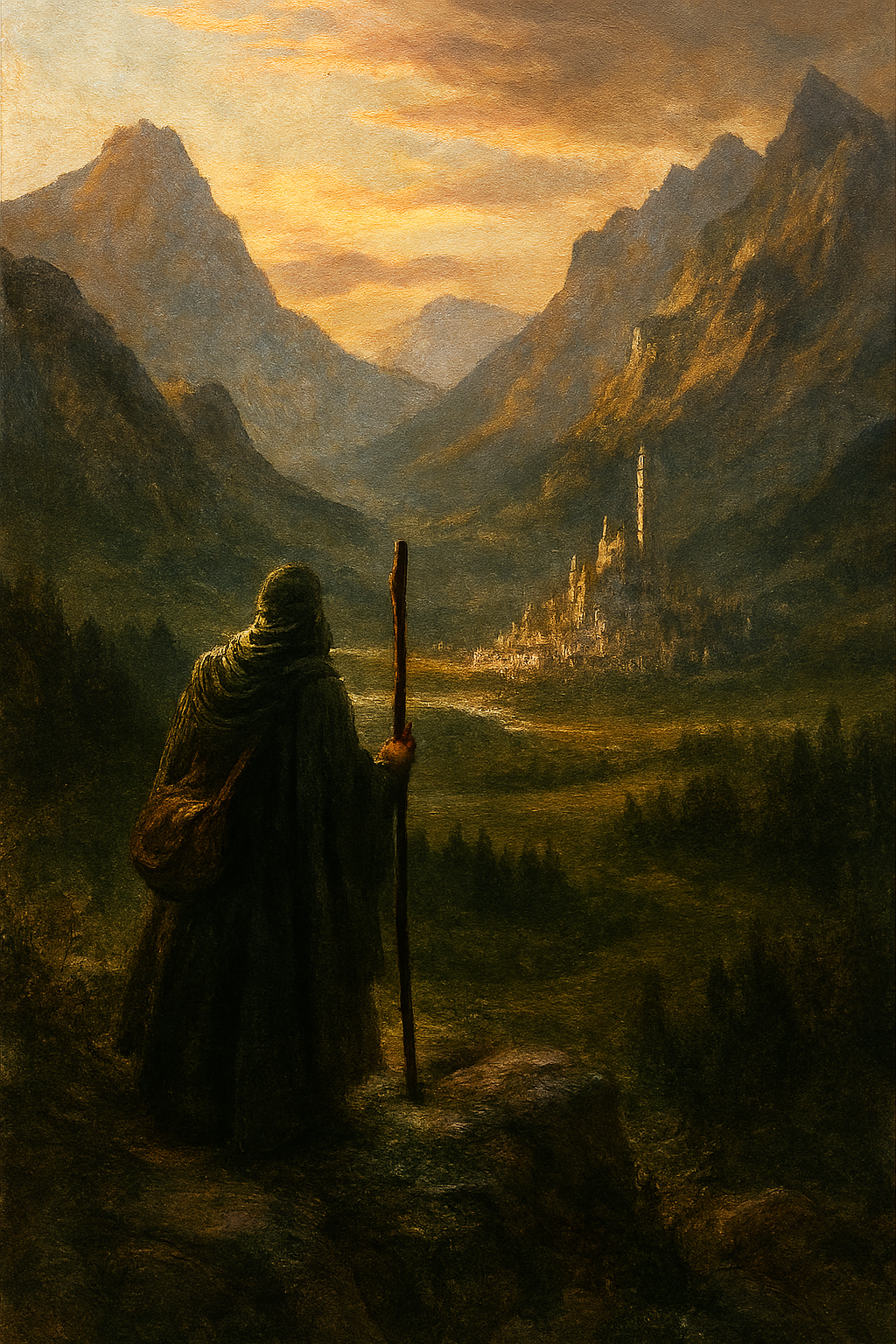
Tolkien began writing The Lord of the Rings in the late 1930s, and the three-volume epic was published between 1954 and 1955. The story, set in the fictional world of Middle-earth, follows the journey of Frodo Baggins, a hobbit tasked with destroying the One Ring, a powerful artifact created by the Dark Lord Sauron to rule all of Middle-earth. The epic saga weaves together themes of friendship, courage, and the battle between good and evil.
Tolkien’s creation of Middle-earth, complete with its languages, cultures, and rich history, has made The Lord of the Rings one of the most immersive and influential works of fiction ever written. The books have been translated into over 50 languages and adapted into films, television series, and other forms of media.
Generated by AI
Tolkien’s Literary Contributions
Tolkien is credited with creating the modern fantasy genre, inspiring generations of writers, filmmakers, and game designers. His works introduced readers to a new world filled with mythical creatures, powerful magic, and epic quests. The richly detailed history of Middle-earth, as well as the languages and cultures he created, set Tolkien’s work apart from other fantasy authors.
His invention of Elvish languages, including Quenya and Sindarin, showcases his expertise in philology. The linguistic depth of his work, along with the lore of Middle-earth, has made his writing a subject of academic study, as scholars continue to analyze and interpret the complex world he built.
Later Life and Legacy
Tolkien’s personal life was marked by the close bond he shared with his wife, Edith Bratt, whom he married in 1916. The couple had four children together, and Tolkien often incorporated elements of his family life into his writing. Edith served as the inspiration for Lúthien, a central character in The Silmarillion, a posthumously published collection of Tolkien’s mythological stories.
Tolkien continued to write and revise his work throughout his life. After completing The Lord of the Rings, he spent years working on various related works, including The Silmarillion, which was published posthumously in 1977, and The History of Middle-earth, a multi-volume series of essays, drafts, and revisions.
Tolkien died on September 2, 1973, at the age of 81. His death marked the end of a legendary literary career, but his influence remains as strong as ever. His works have inspired a massive fan following, and adaptations of his books, including Peter Jackson’s film trilogy of The Lord of the Rings, have introduced his stories to new generations of readers and viewers.
Conclusion
J.R.R. Tolkien’s legacy as a writer, scholar, and creator of Middle-earth is undeniable. His works have not only shaped the fantasy genre but also deeply influenced the way we think about storytelling, myth, and the power of language. Through The Hobbit and The Lord of the Rings, Tolkien has given the world timeless stories that continue to inspire and entertain.
His contribution to literature is immeasurable, and his influence is seen in a wide range of media—from literature to film, television, and video games. As a writer who constructed an entire world with depth and complexity, Tolkien’s place in the pantheon of literary greats is secure, and his stories will continue to captivate readers for generations to come.
J.K. Rolling
J.K. Rowling: A Journey from Struggles to Stardom
Joanne Kathleen Rowling, better known by her pen name J.K. Rowling, is an internationally recognized British author who has transformed the landscape of children’s literature with her Harry Potter series. Beyond the books themselves, Rowling has become a global icon, influencing not only readers in the West but fans across the world. Her writings have been translated into dozens of languages, solidifying her as one of the most well-known authors in modern history.
Early Life and EducationBorn on July 31, 1965, in Yate, Gloucestershire, England, J.K. Rowling had a modest upbringing. Her early years were marked by both family complexity and tragedy. Her mother passed away from complications related to multiple sclerosis when Rowling was just in her twenties, a loss that deeply affected her and would later influence her writing. Despite the challenges, Rowling's intellectual curiosity led her to study French at the University of Exeter, graduating with a Bachelor of Arts in 1986.
Though Rowling had a passion for writing from a young age, her career didn't follow a smooth path to success. After finishing her studies, she moved to London, where she took on various jobs, including a position at Amnesty International, a charity she remains passionate about supporting to this day.
The Birth of Harry PotterThe idea for the Harry Potter series first came to J.K. Rowling in 1990, and it would take her several years to develop the characters and storylines that would eventually captivate millions. However, her road to success was filled with setbacks. At the time she conceived the idea for the boy wizard, Rowling was struggling with personal difficulties, including the loss of her mother and her life as a single mother living on government benefits. Despite her challenges, she remained committed to her writing.
Rowling's first book, Harry Potter and the Sorcerer’s Stone (released in the U.S. in 1997), was rejected by twelve publishers before being accepted by Bloomsbury Publishing in 1996. The book would go on to become the foundation of a series that would change the world. The Harry Potter books gained popularity quickly, and the release of each new book saw more success than the last. Harry Potter and the Goblet of Fire (2000) is often regarded as one of the series' biggest successes, both critically and commercially.

Generated by AI
The Harry Potter PhenomenonThe Harry Potter series, with its seven books, became a global phenomenon. The franchise has sold over 500 million copies worldwide, translated into more than 80 languages, and has inspired an equally successful film series. Warner Brothers bought the film rights for the first two books in a multi-million-dollar deal, leading to an enduring partnership that would further cement Rowling’s place in pop culture.
While Rowling initially wrote for children, the depth and complexity of the Harry Potter books have attracted a vast adult audience. Many fans regard the series not just as entertainment, but as a deeply meaningful exploration of themes like friendship, sacrifice, and the battle between good and evil.
Other Works and Literary SuccessAlthough Harry Potter remains her most famous work, J.K. Rowling has authored several other novels. Under the pen name Robert Galbraith, she has written a series of crime fiction novels, including The Cuckoo’s Calling (2013), which were met with critical acclaim and helped establish her as a versatile writer beyond fantasy fiction.
Additionally, Rowling has expanded the Harry Potter universe with works like Fantastic Beasts and Where to Find Them (2001), a companion book that contributed to the franchise's global success. Her works outside of the Harry Potter series show that she is a writer with a broad range of skills and interests, including adult fiction and crime thrillers.
J.K. Rowling’s Personal Life
Rowling's personal life has also played a significant role in shaping her work. After the death of her mother, she moved to Portugal, hoping to escape the grief. While in Portugal, she married Jorge Arantes, a Portuguese television journalist, and gave birth to her daughter. However, the marriage was short-lived, and she returned to the UK as a single mother. During this time, Rowling faced financial difficulties and relied on government assistance while continuing to write.
Generated by AI
In 2001, Rowling remarried to Neil Murray, a Scottish doctor, and the couple has had two children together. Rowling has also been an outspoken advocate for several charitable causes, including poverty alleviation and support for children’s rights.
Famous Quotes from J.K. Rowling
Rowling’s writing is not only popular but often thought-provoking, and she has shared numerous memorable quotes that have resonated with fans and readers. Some of her most famous lines reflect her views on life, writing, and the complexities of human nature:
- “It is impossible to live without failing at something unless you live so cautiously that you might as well not have lived at all—in which case, you fail by default.”
- “Things we lose have a way of coming back to us in the end, if not always in the way we expect.”
- “Remember, if the time should come when you have to make a choice between what is right and what is easy, remember what happened to a boy who was good, and kind, and brave because he strayed across the path of Lord Voldemort. Remember Cedric Diggory.”
Her words often draw upon themes of bravery, perseverance, and self-belief, principles that are deeply embedded in her writing.
The Legacy of J.K. Rowling
J.K. Rowling’s story is one of extraordinary perseverance and resilience. From the struggling single mother with no published books to one of the wealthiest and most influential authors in the world, her journey is a testament to the power of persistence and the magic of storytelling. The Harry Potter series has not only provided readers with entertainment, but it has shaped generations of young minds, fostering a love of reading and inspiring countless creative minds to pursue writing.
As of 2024, Rowling continues to inspire through her books, philanthropic efforts, and public advocacy. Her legacy is firmly entrenched in the fabric of modern culture, and she remains one of the most celebrated authors in the world.